


 Deutsch
 English
 Español
 Français
 Nederlands
 Português


 Share
Share




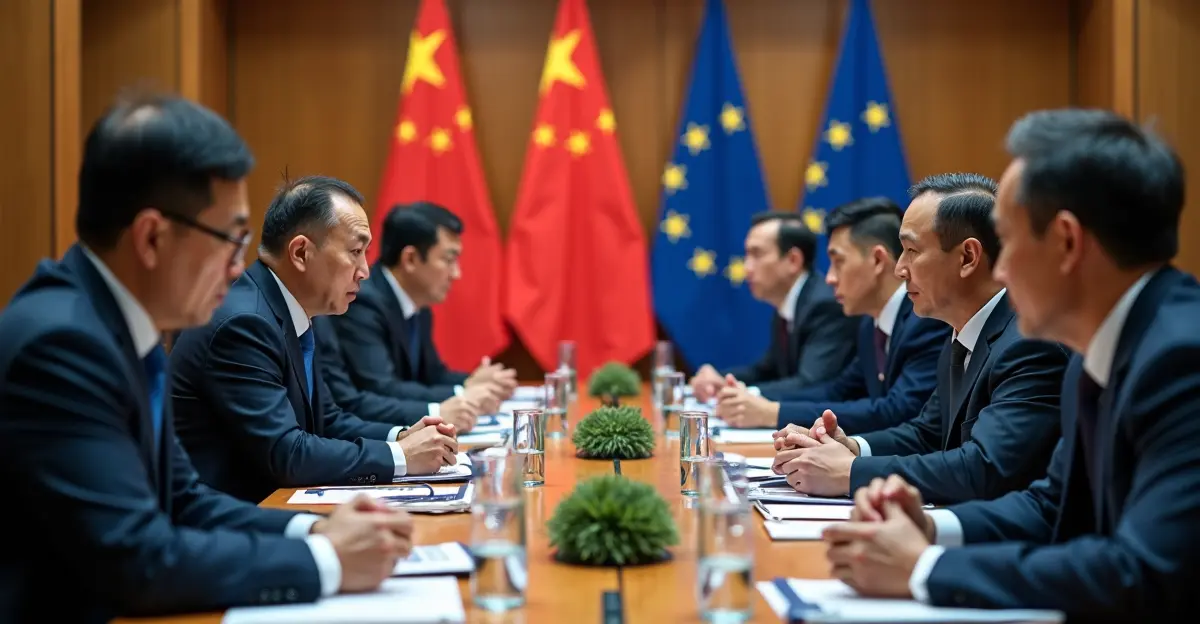
As China's goods trade surplus with the European Union surged to €360.6 billion in 2025 — up 15% year-on-year and equal to nearly €1 billion per day — Brussels is abandoning its decades-old preference for dialogue in favor of aggressive trade defense measures. The proposed 'European Section 301' law, backed by France and Germany, marks a structural realignment that could, for the first time, coordinate EU and U.S. pressure on Beijing simultaneously, reshaping global trade corridors and creating new strategic risks for supply chains across the transatlantic axis.
Why Brussels Is Abandoning Dialogue
The shift reflects a growing consensus among EU member states that tariffs alone are insufficient. The European Commission has already imposed duties of up to 35.3% on Chinese electric vehicles, and 18 of the bloc's 21 active trade-defense investigations target Chinese producers. But Chinese automakers pivoted to hybrids, and Beijing's surplus continued to widen in early 2026, according to IBTimes Singapore. Officials believe the EU needs a more muscular legal tool, akin to the U.S. Section 301, to counter what they call 'systemic and structural industrial overcapacity.' This push aligns with broader EU industrial policy reforms and ongoing debates over economic security screening.
What Is a European Section 301?
A European Section 301 would allow the European Commission to impose tariffs, quotas, or other retaliatory measures without waiting for a WTO dispute ruling, similar to the U.S. Trade Act of 1974 provision. Under existing EU law, anti-dumping measures require lengthy investigations and proof of specific dumping margins. The new instrument would enable faster action against perceived unfair practices, including subsidies and overcapacity, with retroactive duties potentially exceeding 50% on targeted goods. Legal experts caution that any such mechanism must include proportionality, judicial review, and temporary tariff clauses to comply with EU treaties, as noted by the Atlantic Council. This debate also intersects with the future of WTO dispute settlement.
The Numbers Behind the Shift
Key figures driving the EU's pivot include:
- EU-China goods trade deficit: €360.6 billion in 2025 (up 15% year-on-year)
- EU tariffs on Chinese electric vehicles: up to 35.3%
- Active EU trade-defense investigations: 21, with 18 targeting China
- China's share of global rare-earth processing: roughly 90%
- Proposed single-supplier cap for critical components: 30–40%
These figures underscore why the bloc is also reviewing its EU rare earths policy and considering new sourcing rules for public procurement.
New Investigations and Retroactive Duties
New anti-dumping investigations now target chemicals, materials, and electric vehicles, with potential retroactive duties above 50% on some products, according to reports by Fortune and The Economist. These investigations, if concluded, would mark the most aggressive use of EU trade defense since the bloc's steel safeguard measures. The European Council is set to decide on sweeping reforms in June 2026, and UNCTAD has flagged trade fragmentation as the defining economic trend of the year. This comes as the EU updates its EU anti-dumping regulations to enable faster action.
Transatlantic Coordination and Strategic Risks
For the first time, the EU and U.S. may coordinate pressure on China simultaneously. U.S. Trade Representative Jamieson Greer has already initiated a Section 301 investigation into Germany over pharmaceutical pricing, complicating transatlantic unity. Yet the shared goal of countering Chinese overcapacity is pushing both blocs toward parallel action. This creates new strategic risks for supply chains across the transatlantic axis, as companies face tariff walls on both sides. UNCTAD warns that such fragmentation could reduce global trade efficiency and raise costs for consumers, while accelerating global supply chain diversification.
FAQ
What is the EU-China trade surplus in 2025?
China's goods trade surplus with the EU reached €360.6 billion in 2025, up 15% year-on-year, nearly €1 billion per day.
What is a European Section 301?
It is a proposed EU trade defense instrument allowing retaliatory tariffs without WTO authorization, modeled on the U.S. Section 301, with potential retroactive duties above 50%.
When will the EU decide on trade defense reforms?
The European Council is set to decide on sweeping reforms in June 2026.
Which sectors are targeted by new EU anti-dumping investigations?
Chemicals, materials, and electric vehicles, with potential retroactive duties above 50%.
How are France and Germany positioned on the proposal?
France strongly backs tougher measures and economic sovereignty; Germany supports reforms but remains cautious due to its €246 billion bilateral trade with China.
Conclusion
Brussels' pivot from dialogue to deterrence is not just a policy shift; it is a structural realignment of global trade. With the EU and U.S. potentially acting in concert, the post-WTO consensus on trade dispute resolution is eroding. Companies and governments must prepare for a more fragmented, tariff-heavy trading environment.




Follow Discussion